Tuesday, May 1, 2012

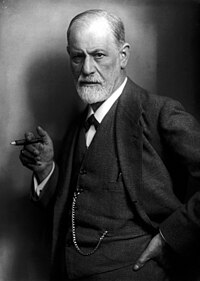
Sigmund Freud

For those of you still reeling from the Psychoanalytic interpretation of Hamlet, here is an excerpt from the man himself, taken from his book, The Interpretation of Dreams.

Also, here is a great outline on Psychoanalytic theory, if you are interested in reading an overview of what Freud believed.

It is definitely interesting and worth learning more about and, as I said in class, will certainly be something you will learn about in Psychology in college.

Friday, April 27, 2012

Hamlet's Dilemma

Good morning all, sorry that I can't be there today, but by now I expect that you should be able to handle  finishing a blog post in class on your own (even if it is a Friday).  Please try to stay focused enough to finish by today.  BTW....Please note that my 7th period has been added to the bottom right.  Please think of responding to them, too!

There are a few things to make sure you have completed before you start...
  • First, did you write your reflection on the ghost scene?  If not do so first.
  • Next, did you comment on at least one person's reflections?  If not, do that.
  • Then, did you write your "To be or not to be" reflections?  Make sure you've done that.
  • Now, (this is new) reflect on at least one other person's blog for the "To be or not to be" scene.  Make sure you make appropriate comments, highlight what you liked about their ideas, and think critically about what they noticed.
  • Finally, if you are done with all of that, your third entry for Hamlet on your personal page should be about the following question in 1-2 paragraphs....


Do you agree or disagree with Hamlet's hesitation to kill Claudius?  Is he right for waiting, and thinking about it carefully?  Or should he have just shut up and done it already?

Consider carefully the ethical implications of murder, and the cultural issues of honor and filial obligation.  Consider also religious ramifications, as they are a thematic focus in the play.  And of course, consider whether you think Claudius is really guilty,  what would be the cost if he were not, and what might happen to poor Hamlet if he killed the king considering everyone things he is a madman.

Thank you for your cooperation and remember that I will be at my computer during my meeting, if you have questions, and I will be looking to see what you are writing during the period, so make sure you're really working. Enjoy your weekend and I will see you on Monday!

PLEASE REMEMBER THAT FOR FULL CREDIT, YOUR RESPONSES MUST MEET THE LENGTH REQUIREMENTS GIVEN.

Tuesday, April 24, 2012

Attention!!

One of your fellow classmates is raising money for summer camp.  She has already participated in 5K run as a fundraiser and she is continuing to raise money up until August. 

It would be really awesome if you could help support her!!  You can read more about it on her blog here.

PLEEEEASE consider donating!! If each of you just gave a dollar it would amount to a lot of money!! :)

Friday, April 20, 2012

"To Be or Not To Be..."


The following links will bring you to the videos that we viewed in class.  Take a moment to review them before considering the prompt.
Olivier's Hamlet             Zeffirelli's Hamlet  


Your Task:

Reflect on each film version of Hamlet's soliloquy in more depth. Consider using some of your notes to guide you.

In each version of the play, what is the setting? What effect does this have? What is the director trying to convey?

Is there any music? What mood does this set?

What choices does the director make about lighting or props? Do these choices reinforce the theme of his speech?

What figurative aspects of the speech are represented literally (if any)? How does the director use these symbols throughout the speech?

What is the emotion with which the actor repeats the lines? How does this change throughout the speech? What effect does this have?

Why are there so many versions of this play? What do you think that says about the universality of Hamlet? Which version of the play did you like the most (do not think of putting Schwarzenegger's)? What about this version was most effective in your opinion?


Wednesday, April 11, 2012

The First Ghost Scene

Analyze
Using the three versions of the ghost scene that we watched in class, offer your commentary on each film.  Consider some of the following points in your critique:

  • How did the actors portray the characters?
  • Was there music?
  • What was the lighting like?
  • Were there special effects?
  • How did the director use visual elements (such as flashback) to add depth to the scene?
Overall what was the effect of these choices?  Do you agree or disagree with the choices the director made?  Which version resonated with you the most?

Extend
If you were to interpret this scene through film yourself, how would you approach it?  What in particular would you focus on?  What in your opinion, is important about this scene and how would you want to convey that?  

For example, what do you want to leave your audience with after watching this scene?  Is it the despair that the ghost feels? Or Hamlet's frustration?  Do you find fault with Gertrude, and want to cast doubt about her involvement?  Or is Hamlet imagining this scene?  Could you, through directorial choices, convey that Hamlet is imagining all this? 

Assignment 
Address these questions, or other topics which you feel are relevant, in a minimum of 2-3 paragraphs.   When you refer to the movies you should use the director's last name to note the different versions, and when you refer to the characters, use the actor's last names.

Director: (Franco) Zeffirelli     Hamlet: (Mel) Gibson

Director: (Kenneth) Branagh    Hamlet: (Kenneth) Branagh

Director: (Michael) Almereyda   Hamlet: (Ethan) Hawke


 Film Version Links

Zeffirelli Version (short clip, but enough to see part of it)


Monday, April 9, 2012

A Sample of Old English

In starting Shakespeare, many of you often mistake Shakespearean language for Old English.  Actually Old English, is something so different from our own language it's virtually indecipherable.  Even Middle English is quite difficult to understand.  Surprisingly, Shakespeare actually wrote in MODERN ENGLISH! It's just that vocabulary usage changes over time and place, so it's harder for us to understand it now.

Even in modern times there are words in English that the British use, that we find confusing, strange, or silly (and vice versa).  And you may know that a Spanish word that a Puerto Rican would use would mean something completely different than what someone from Spain might understand it to mean.  In the same way, people in Elizabethan England would think you were pretty confusing, too!  Language is given meaning by those who use it, and it is constantly changing.  So much so that the Oxford English Dictionary adds new words every year!

Since some of you were curious about Old English, I thought I would post a sample of Beowulf (which you will read next year), in its original Old English format, to give you a sense of what it looks like.  You can also read more of it here.

1-21
HWÆT, WE GAR-DEna in geardagum, 
þeodcyninga þrym gefrunon, 
hu ða æþelingas ellen fremedon! 
oft Scyld Scefing sceaþena þreatum, 
monegum mægþum meodosetla ofteah, 
egsode eorlas, syððanærest wearð
feasceaft funden; he þæs frofre gebad,
weox under wolcnum weorðmyndum þah,
oð þæt him æghwylc ymbsittendra
ofer hronrade hyran scolde, 
gomban gyldan; þæt wæs god cyning! 
Ðæm eafera wæs æfter cenned 
geong in geardum, þone God sende 
folce to frofre; fyrenðearfe ongeat, 
þe hie ær drugon aldorlease 
lange hwile; him þæs Liffrea, 
wuldres Wealdend woroldare forgeaf, 
Beowulf wæs breme --- blæd wide sprang--- 
Scyldes eafera Scedelandum in. 
Swa sceal geong guma gode gewyrcean, 
fromum feohgiftumon fæder bearme,
Wednesday, March 28, 2012

A Message from Dr. West...

Today as I was reading Dr. Cornel West's FB status, and I liked it so much, I had to share it.  I think that this speaks not only to what I hope that you will consider as you start your persuasive letters, but also as we bring the year to a close and you get ready for senior year.

Don't forget - Some of you will be voting for the next president next year.  So no matter what your political affiliations might be, and where you will find yourself in the future, reflect deeply on the issues that are important to you, and find a way to be active about them!

From Cornel West's status update (3/26/12):
Message to student activists: You are in school to FIND YOUR VOICE. Don't ask for anyone's permission about what you want to work for. Consultation is important, but the choice is yours. Figure out what your vocation is, not just your profession; what is your calling, not just your career; don't tell me about your job, I want to know about your life's task. If activism is in your heart, embrace it. Everybody can't be a full time activist, but find time in your vocation for your activism. Take me for example: I have to get to the studio, the library, the laboratory, hit the church and the club. In between all of that, I am committed to working for the economic justice of those living poverty.